Dental Implants vs. Dental Bridges: How to Compare Options for a Missing Tooth
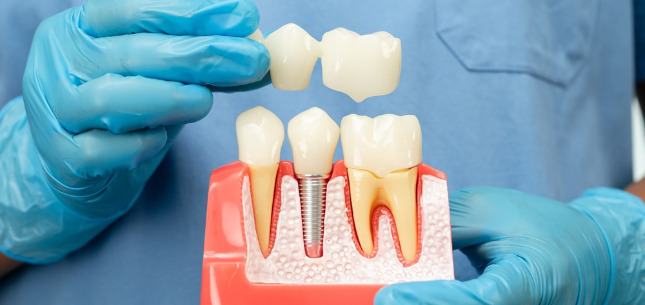
Dental implants and dental bridges can both replace a missing tooth, but they work in different ways. An implant replaces the missing tooth root with a post placed in the jawbone and supports a replacement tooth. A traditional bridge fills the gap using an artificial tooth supported by neighbouring teeth. A dentist in Burnaby can help you compare these options based on your oral health, nearby teeth, bone support, treatment preferences, timeline, and budget.
Neither option is universally better. A dental examination helps determine which solutions are appropriate for your particular situation.
What Is the Difference Between a Dental Implant and a Dental Bridge?
What is a dental implant?
A dental implant is an artificial tooth root, typically made of titanium, that is placed in the jawbone. After the site heals and the implant integrates with the bone, a replacement tooth can be attached.
Implants can support a single crown or form part of a larger tooth-replacement restoration. The Canadian Dental Association explains the treatment stages and general suitability considerations in its guide to dental implants.
What is a dental bridge?
A dental bridge is a fixed restoration that spans the space left by one or more missing teeth. In a traditional bridge, the artificial tooth is supported by crowns placed on neighbouring teeth. Other designs may use different support arrangements, including implants.
The Canadian Dental Association’s explanation of dental bridges describes how the restoration is designed and supported.
Dental Implants vs. Bridges: A Side-by-Side Comparison
| Consideration | Dental implant | Traditional dental bridge |
| Main support | An implant placed in the jawbone | Supporting teeth on either side of the gap |
| Effect on neighbouring teeth | A single-tooth implant generally does not require reshaping neighbouring teeth | Supporting teeth usually need preparation for crowns |
| Surgery | Implant placement involves a surgical procedure | A traditional bridge usually does not require implant surgery |
| Treatment timeline | Often takes several months because healing is required; additional procedures may extend it | May be completed over a shorter series of visits, depending on the case |
| Bone considerations | Bone volume and gum health matter for implant planning | Does not replace the missing root; suitability depends on the supporting teeth and overall oral health |
| Daily care | Requires brushing, cleaning between teeth, and professional follow-up | Requires brushing and careful cleaning around and beneath the bridge |
| Cost considerations | Includes implant placement and the final restoration; additional procedures may affect the price | Depends on the bridge design, materials, supporting teeth, and laboratory work |
| Long-term planning | Requires maintenance and monitoring of both implant and restoration | Requires maintenance and monitoring of the bridge and supporting teeth |
This comparison describes general differences. An implant-supported bridge is also possible in certain cases, so not every implant restoration is a single crown.
When Might a Dental Implant Be Appropriate?
An implant may be worth discussing if you are missing a tooth and want a replacement supported by the jawbone rather than by prepared neighbouring teeth.
Factors a dentist may assess include:
- The health of your gums.
- The amount and condition of the jawbone.
- Your overall health and relevant medications.
- Whether the missing-tooth space can accommodate an implant and restoration.
- Whether you are comfortable with a surgical procedure and healing period.
- Your ability to maintain the implant and attend follow-up appointments.
Implant treatment is not suitable for everyone in every circumstance. Some people may need additional treatment before placement, and a dentist may recommend a specialist assessment for complex cases.
For details about the clinic’s offerings, see dental implant treatment in Burnaby.
When Might a Dental Bridge Be Appropriate?
A bridge may be worth considering when the neighbouring teeth can support the restoration and the clinical circumstances make a bridge a suitable option.
For example, the supporting teeth may already need crowns for independent reasons. That possibility does not automatically make a bridge the best choice, but it is one of the factors to discuss with a dentist.
A bridge may also appeal to someone who prefers to avoid implant surgery. The decision still depends on the condition of the supporting teeth, the location of the missing tooth, the type of bridge, and how the restoration can be kept clean.
Read about the clinic’s dental bridge service for information about this replacement option.
Which Option Is Better for One Missing Tooth?
There is no single answer for every patient. A useful comparison starts with the condition of the teeth and gums around the gap.
Consider these questions with your dentist:
- Are the neighbouring teeth healthy, already restored, or damaged?
- Is there sufficient bone for an implant, or would additional treatment be needed?
- What are the expected stages and healing requirements?
- How will each option affect daily cleaning and professional maintenance?
- What is the full estimated cost, including any supporting treatment?
- What are the consequences of delaying replacement in your particular case?
A bridge and an implant can both restore function and appearance. The choice should be based on clinical findings and informed preferences – not a blanket claim that one treatment is always stronger, cheaper, or longer-lasting.
How Do Cost and Treatment Time Compare?
Implants generally involve a surgical stage followed by healing and placement of the final restoration. The healing period can take several months, and additional procedures may extend the process.
Bridge treatment usually focuses on preparing the supporting structures and fitting the custom restoration. The timeline depends on the type of bridge, the condition of the supporting teeth, and the number of appointments needed.
Cost should be compared over the whole treatment plan. For an implant, ask whether the estimate includes imaging, placement, the abutment, final crown, and any additional procedures. For a bridge, ask which teeth will support it, which materials are planned, and what is included in the quoted fee.
A written estimate also helps clarify insurance benefits and out-of-pocket charges. The clinic’s dental insurance and financial information is a useful starting point, but specific benefits must be confirmed under your plan.
What Happens If You Delay Replacing a Missing Tooth?
A missing tooth does not necessarily cause immediate pain, but the gap may affect chewing, bite relationships, or the position of nearby teeth over time. Changes vary from person to person.
The clinic’s existing article, What Happens If You Don’t Replace a Missing Tooth?, explains why it can be useful to discuss replacement options rather than ignore the gap.
A dentist can assess whether replacement is needed and which options are reasonable. The recommendation should reflect the state of your oral health, the function of the affected area, and your preferences.
Questions to Ask at a Tooth-Replacement Consultation
Before proceeding, consider asking:
- What are my realistic treatment options?
- Why do you recommend a bridge or an implant for my specific case?
- What are the main benefits, limitations, and risks of each?
- How many visits may be needed, and what healing time should I plan for?
- What will the complete treatment cost?
- What maintenance will be necessary after treatment?
- Would a specialist consultation be appropriate?
These questions help you compare the available choices without assuming that the same treatment is best for every missing tooth.
Frequently Asked Questions
Is a dental implant better than a bridge?
Not for everyone. An implant and a bridge use different forms of support and have different requirements. A dentist should assess your bone, gums, neighbouring teeth, health, and preferences before recommending an option.
Is a bridge faster than an implant?
A traditional bridge may be completed over a shorter series of appointments, while implant treatment often requires a healing period that can last several months. Individual treatment plans vary.
Does a bridge require changing neighbouring teeth?
A traditional bridge usually requires the supporting teeth to be prepared for crowns. Other bridge designs may be different. Ask which design is being considered and how it would affect your teeth.
Are dental implants more expensive than bridges?
The initial cost can differ considerably by case. An implant estimate may include surgery and a separate restoration, while a bridge estimate depends on the number of units, supporting teeth, and materials. Compare complete written estimates rather than a single headline price.
Can anyone get a dental implant?
No. Gum health, bone support, medical history, medications, and other clinical factors can affect suitability. An examination and appropriate imaging help determine whether implant treatment is an option.
Do dental bridges and implants need cleaning?
Yes. Both need daily home care and professional follow-up. Your dentist or hygienist can show you how to clean around the restoration and what signs should prompt an appointment.
Conclusion: Choose Based on Your Dental Health
Dental implants and bridges are established tooth-replacement options, but their differences matter. Implants use support in the jawbone, while traditional bridges rely on neighbouring teeth. Healing time, bone health, maintenance, cost, and the condition of adjacent teeth all help shape the decision.
Patients considering replacement can review the clinic’s implant and bridge pages, then contact Metrotown Family Dentistry to discuss an assessment.