Dental Implants vs. Dental Bridges: How Do You Choose?
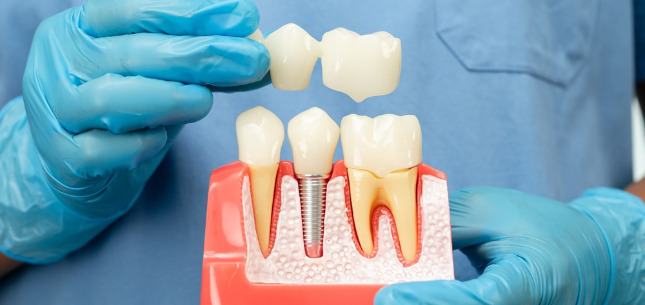
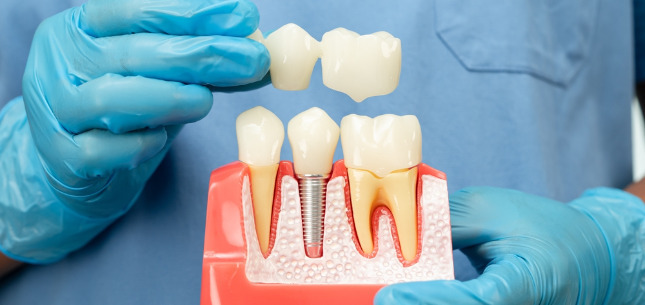
Dental implants and dental bridges can both replace missing teeth, but they work differently. A dental implant uses a post placed in the jawbone to support a replacement tooth, while a traditional bridge fills a gap by attaching an artificial tooth to neighbouring teeth or restorations. The right option depends on your oral health, bone and gum condition, surrounding teeth, treatment preferences, and cost.
There is no universally best choice. A dentist in SW Calgary can examine the area and explain which options are clinically suitable for your dental needs.
What is a dental implant?
A dental implant is a small post, often made of titanium or another suitable material, that is placed in the jawbone to support a replacement tooth. After healing and integration with the bone, it can support a crown or another restoration.
Implants can be used to replace a single tooth and may also support larger tooth-replacement designs.
Potential advantages include:
- The replacement tooth can be supported independently of neighbouring natural teeth.
- The implant transfers chewing forces to the surrounding bone.
- The visible crown can be designed to resemble a natural tooth.
- An implant-supported restoration can be cleaned and maintained as directed by the dental team.
However, implant treatment involves surgery, healing, and sufficient conditions for placement. Some patients require additional procedures or may not be suitable candidates.
What is a dental bridge?
A traditional fixed dental bridge replaces one or more missing teeth by using supporting teeth on one or both sides of the gap. These supporting teeth are commonly prepared to receive crowns that hold the artificial tooth in place.
Potential advantages include:
- It does not require an implant post to be placed in the jawbone.
- It can replace a missing tooth without implant surgery.
- Treatment may be completed over a shorter period than implant treatment in some circumstances.
- It can restore appearance and chewing function when properly designed.
A conventional bridge may require altering the neighbouring teeth. Its long-term success depends on the condition of the supporting teeth, gum health, hygiene, bite forces, and the design of the restoration.
Other bridge designs exist, so the precise comparison depends on the proposed treatment.
Dental implants vs. bridges: comparison table
| Factor | Dental implant | Traditional fixed bridge |
| Support | Implant in the jawbone | Usually neighbouring supporting teeth |
| Surgery | Implant placement surgery is generally required | Usually no implant surgery |
| Effect on neighbouring teeth | Often does not require preparing adjacent healthy teeth | Supporting teeth usually need preparation |
| Treatment timeline | Often involves healing over months | May be completed sooner in suitable cases |
| Bone considerations | Requires assessment of bone and gum conditions | Does not require an implant post, although overall oral health still matters |
| Cleaning | Implant crown and surrounding gum area require daily care | Special cleaning beneath the bridge is often necessary |
| Maintenance | Professional review and hygiene are important | Supporting teeth and bridge margins need careful maintenance |
| Cost | Depends on surgical and restorative needs | Depends on bridge design, materials, and supporting teeth |
This table describes common approaches, not every possible restoration. Your dentist should explain the specific design being considered.
Which option lasts longer?
Neither treatment has a guaranteed lifespan. Implants and bridges can both function for many years, but their outcomes depend on patient health, oral hygiene, bite forces, the condition of surrounding tissues, and the quality of maintenance.
An implant can develop complications involving the surrounding bone or gums. A bridge can develop problems with its supporting teeth, cement, or restoration. Either may require repair or replacement.
Rather than choosing solely by expected lifespan, ask how the proposed option would be maintained and what complications are relevant to your mouth.
Does a dental implant prevent bone loss?
Natural tooth roots stimulate the jawbone during chewing. When a tooth is lost, the bone in that area can change over time.
An implant transmits chewing forces to the bone around it and can help preserve bone locally compared with leaving the site without a root replacement. However, it does not guarantee that bone loss will never occur. The surrounding bone and gum tissue still require monitoring.
A bridge restores the missing tooth’s visible portion but does not place an implant in the gap. Whether bone changes matter to your treatment plan depends on the site and your clinical circumstances.
Who might be suitable for a dental implant?
Suitability depends on several factors, including:
- The quantity and quality of available bone.
- Gum health and control of periodontal disease.
- Medical history and medications.
- Smoking and other factors that may affect healing.
- Oral hygiene and ability to attend follow-up appointments.
- The location of the missing tooth and bite forces.
Bone grafting or other procedures may be considered in selected cases. An assessment is needed before determining whether these are appropriate.
Who might be suitable for a dental bridge?
A bridge may be appropriate when the supporting teeth are healthy enough to carry the load, or when those teeth already need crowns for other reasons.
Factors to assess include:
- The strength and condition of neighbouring teeth.
- Gum health and the amount of supporting bone.
- The size and location of the gap.
- Bite alignment and chewing forces.
- The patient’s ability to clean beneath the bridge.
- The overall treatment plan and budget.
If neighbouring teeth are healthy, the decision to prepare them for a bridge deserves careful discussion.
Which option costs less?
The cost depends on the individual treatment plan. An implant may involve surgical placement, a healing period, an abutment, a crown, imaging, and potentially additional procedures. A bridge’s cost depends on its length, supporting teeth, materials, and any preparatory treatment.
Ask for a written estimate that separates:
- Examination and imaging.
- Preparatory treatment.
- The implant or bridge itself.
- Temporary restorations, if needed.
- Follow-up and maintenance.
- Possible additional procedures.
Insurance benefits vary by plan and treatment. Ask your insurer for written confirmation of coverage rather than assuming that one option is covered more generously.
Heritage Park Dental offers dental implant and bridge services. The clinic’s team can explain the available treatment pathway and whether referral to a specialist is appropriate.
How do you decide between a bridge and an implant?
Use these questions to guide a consultation:
- Are the teeth beside the gap healthy, or do they already need restorations?
- Is there enough bone for an implant?
- Would additional surgery or healing time be required?
- How will each option affect cleaning and maintenance?
- What are the full costs, including future care?
- What risks and alternatives apply to my medical and dental history?
A recommendation should reflect the specific tooth, surrounding tissues, and patient’s priorities – not a blanket claim that implants or bridges are always superior.
Frequently asked questions
1. Are dental implants better than bridges?
Neither is always better. Implants can replace a tooth without relying on neighbouring teeth for support, while bridges may be suitable when implant surgery is undesirable or supporting teeth are appropriate.
2. Does getting an implant hurt?
Implant placement is performed with appropriate anaesthesia. Some discomfort and swelling can occur afterward, and the amount varies. Your dental team can discuss pain management and recovery expectations.
3. How long does implant treatment take?
The timeline varies with bone health, healing, tooth location, and whether additional procedures are needed. Treatment can take several months and sometimes longer.
4. Can I get an implant if I have bone loss?
Possibly. Some patients may be candidates after further assessment or bone grafting, while others may need a different solution.
5. Is a bridge easier to clean than an implant?
The cleaning methods differ. An implant crown requires careful cleaning around the gumline; a bridge often requires special tools to clean beneath the artificial tooth. Your dentist or hygienist can demonstrate the correct method.
6. Can a dental bridge damage neighbouring teeth?
Preparing supporting teeth removes some tooth structure, and supporting teeth may later develop problems. This risk should be discussed before choosing a conventional bridge.
7. Does insurance cover implants or bridges?
Coverage varies by plan, eligibility, and treatment details. Obtain a written estimate and verify your benefits with your insurer.
8. Where can I compare tooth replacement options in Calgary?
Contact Heritage Park Dental to discuss an assessment and the options relevant to your oral health.